Timer
Started
—
Finishes
—
5:00
No ads in fullscreen
My times
- Nothing saved yet. Saved times stay on this device — no account, nothing uploaded.
An audio file up to 1 MB. It stays in this browser and appears as "My sound" in the Sound list.
- Space
- Start or pause
- F
- Fullscreen
- Esc
- Leave fullscreen
- R
- Reset
- ↑
- Add a minute
- ↓
- Take off a minute
- M
- Mute or unmute
Read next: How long should classroom activities actually take?All 8 timers
Tidy-up timer with a one-minute warning
Tidy-up is where a visible countdown does the most obvious work. "Right, let's start packing away" is negotiable. A clock counting down from five minutes is not.
Sight Word Bingo pack
For the game after the timer goes off: made with our free Bingo Card Generator, this pack is ready for a class. Print it, cut it, play.
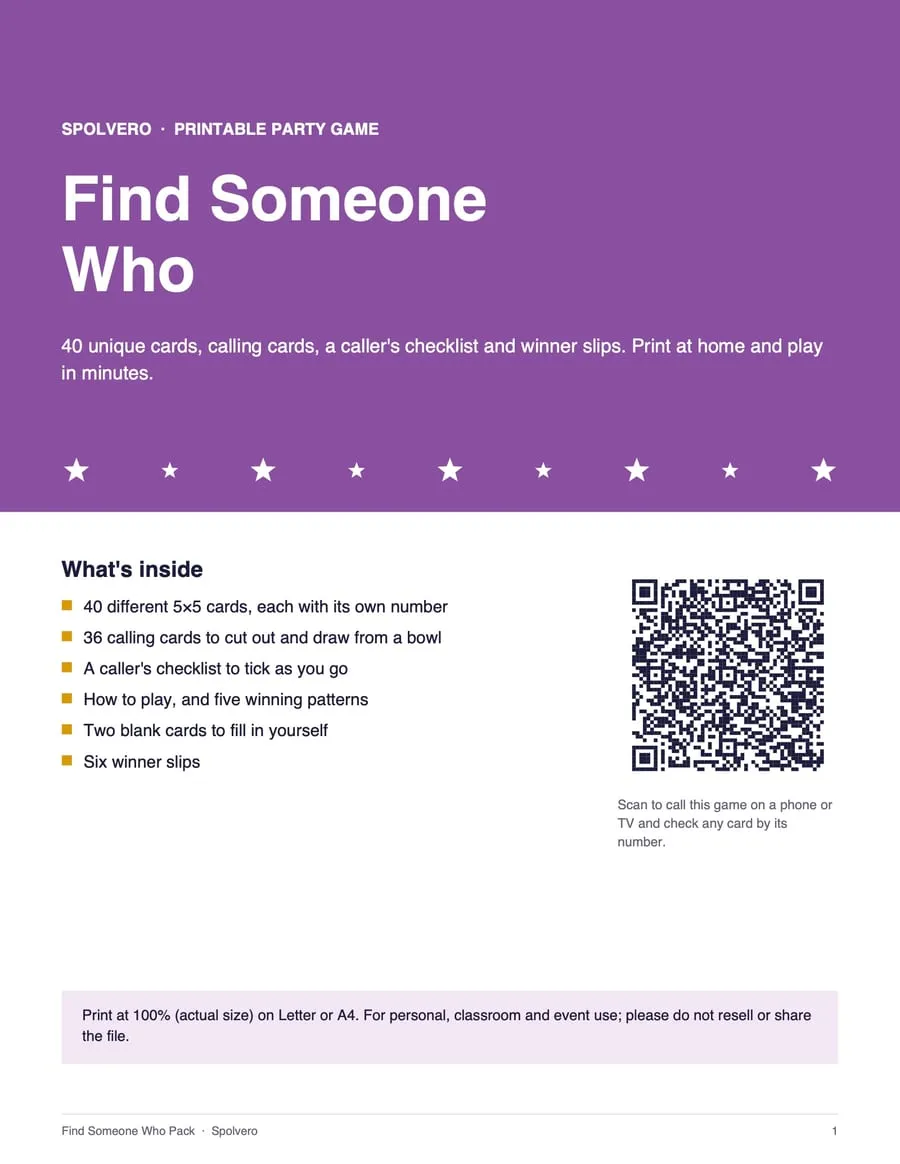
- 40 different 5×5 cards, each with its own number
- 48 calling cards to cut out and draw from a bowl
- A caller's checklist to tick as you go
- How to play, with five winning patterns
- Two blank cards and six winner slips
- A QR code that turns any phone or TV into the caller
$3.99
One payment · instant download · US Letter and A4 PDFs
Secure checkout by Gumroad, without leaving this page. Buying a pack is what keeps the free tools free.Every detail of this pack
More class packs
The short answer
Three to five minutes is enough for most tidy-ups, with a one-minute warning before the end. The warning matters more than the total: stopping abruptly means a half-cleared table, and the shrinking ring on this timer gives a visual warning without you having to say anything.
Three steps to a timer on the wall
Step 1: Choose a time
Pick a preset or set your own. The timer remembers what you used last on this device.
Step 2: Press start
Start the timer, then press F or the fullscreen button to fill the screen.
Step 3: Run the room
Space pauses, the up arrow adds a minute, R resets. Fullscreen shows the timer alone, with no ads and no navigation.
Four things worth knowing
The one-minute warning is the whole trick
Stopping without warning leaves half-finished tables and unfinished sentences. The ring turns amber at 20% remaining, which on a five-minute countdown lands at one minute — say nothing and let the colour do it.
Use a calm chime, not a siren
An alarm in a quiet room startles people and turns the timer into something to dread. A soft chime, or just the colour change, achieves the same end.
The same length every time
Tidy-up gets faster when the class knows exactly how long it is. A duration that changes with your mood teaches them to wait and see.
Start it before you announce it
Press start, then speak. Announcing first and starting second gives away twenty seconds and undermines the point that the clock, not you, is running things.

No ads on your big screen
Ads pay for this page, and they stay on this page. The moment the timer goes fullscreen there is nothing on screen but the time — no banners, no navigation, no surprises in front of a room.
- Fullscreen shows the timer alone
- Ad sounds can never clash with the alarm
- Saved times stay on your device — no account
- Works with an ad blocker, and offline once loaded
Questions people ask
Anything we've missed?
How long should tidy-up take?
Three to five minutes covers most classrooms, less for desks and books alone, more after a practical or art lesson. Keep it consistent — a predictable duration gets faster over a term.
Should I give a warning before time is up?
Yes, particularly for tidy-up and writing, where an abrupt stop means unfinished work. This timer turns amber at 20% remaining, which gives a visual warning without you interrupting.
Does it work in a nursery or reception class?
Yes, and the visual countdown matters more there than anywhere. Children who cannot yet read a clock can still see a ring getting smaller.
Can I use it without sound?
Yes. Mute the chime and the colour change alone carries the message, which is what you want in a room where a sudden noise would be disruptive.
Time something specific
Guides worth reading
- Teaching
How long should classroom activities actually take?
Realistic durations for think-pair-share, group work, silent reading and tidy-up, and why a visible timer changes behaviour more than saying the time aloud.
6 min read - Teaching
How long should a brain break be? Timings, ideas and how to end one
Two to five minutes is the working range for a classroom brain break. How often to run one, what to do in it, and how a visible timer brings the class back.
6 min read


Other timers
- Live
Countdown Timer
Any time you like, rung on time.
- Live
Pomodoro Timer
Twenty-five on, five off, four times.
- Live
Speech Timer
Green, amber, red — the way clubs do it.
- Live
Exam Clock
Start time, finish time, time remaining.
- Live
Interval Timer
Work, rest, repeat — on the gym TV.
- Live
Tabata Timer
Eight rounds, twenty on, ten off.
- Live
Debate Timer
British Parliamentary, Worlds, LD.
Built by Spolvero studio. We design apps and websites for other people too.
Need an app designed?