Timer
Started
—
Finishes
—
3:00
No ads in fullscreen
My times
- Nothing saved yet. Saved times stay on this device — no account, nothing uploaded.
An audio file up to 1 MB. It stays in this browser and appears as "My sound" in the Sound list.
- Space
- Start or pause
- F
- Fullscreen
- Esc
- Leave fullscreen
- R
- Reset
- ↑
- Add a minute
- ↓
- Take off a minute
- M
- Mute or unmute
Read next: How long should classroom activities actually take?All 8 timers
Brain break timer for the classroom
A brain break only works if it ends cleanly. Two minutes that drift into six cost more attention than the break returns, and a visible countdown is what stops the drift.
Sight Word Bingo pack
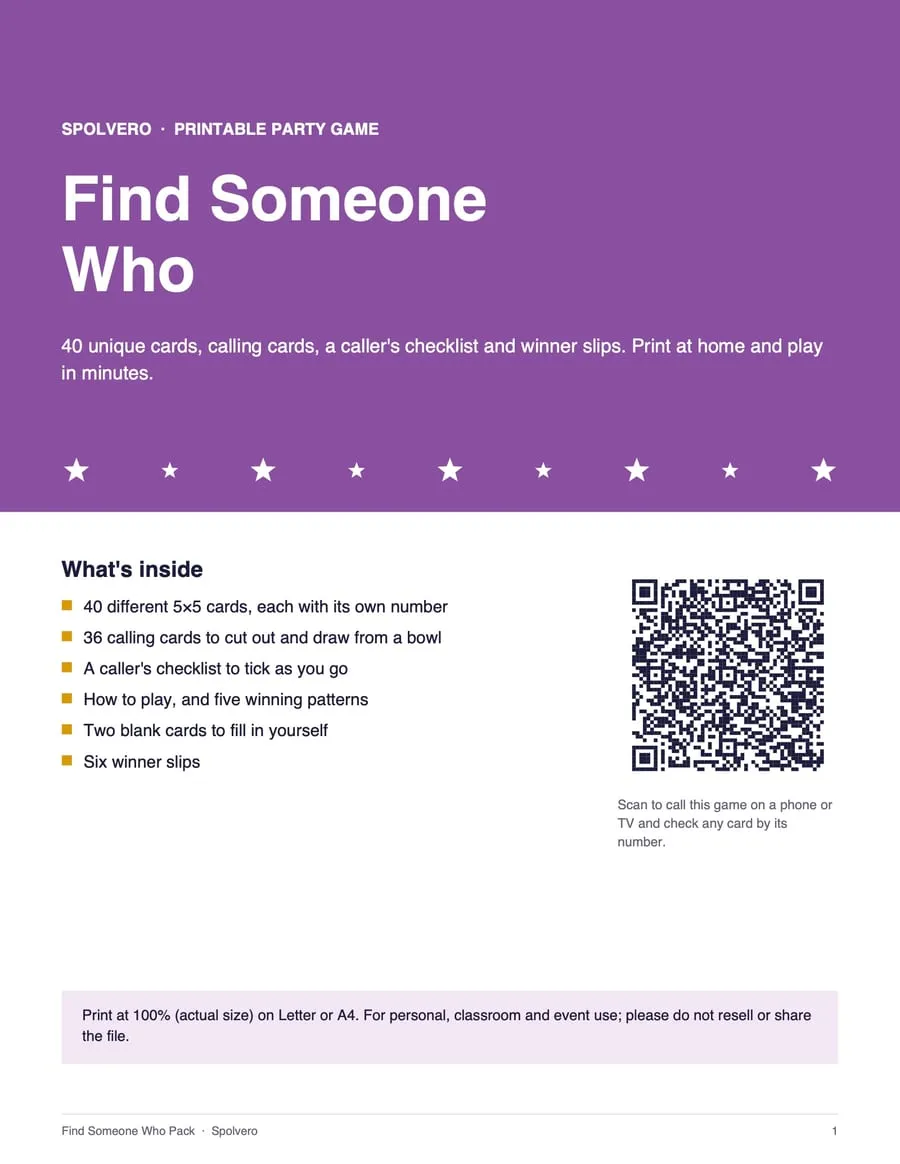
For the game after the timer goes off: made with our free Bingo Card Generator, this pack is ready for a class. Print it, cut it, play.
- 40 different 5×5 cards, each with its own number
- 48 calling cards to cut out and draw from a bowl
- A caller's checklist to tick as you go
- How to play, with five winning patterns
- Two blank cards and six winner slips
- A QR code that turns any phone or TV into the caller
$3.99
One payment · instant download · US Letter and A4 PDFs
Secure checkout by Gumroad, without leaving this page. Buying a pack is what keeps the free tools free.Every detail of this pack
More class packs
The short answer
Two to five minutes is the working range for a classroom brain break — long enough to reset attention, short enough that the lesson survives it. The countdown matters more than the length: an untimed break has no agreed end, so bringing the class back becomes a negotiation rather than a clock reaching zero.
Three steps to a timer on the wall
Step 1: Choose a time
Pick a preset or set your own. The timer remembers what you used last on this device.
Step 2: Press start
Start the timer, then press F or the fullscreen button to fill the screen.
Step 3: Run the room
Space pauses, the up arrow adds a minute, R resets. Fullscreen shows the timer alone, with no ads and no navigation.
Four things worth knowing
Announce the length before it starts
"Three minutes" with a visible countdown ends in three minutes. "A quick break" ends when you insist, which turns the return into a confrontation.
Give the break a shape
Stand up, stretch, talk to someone not at your table. An unstructured break is harder to come back from than a structured one of the same length.
Do not time everything else as well
A lesson made entirely of countdowns drains the room. Keep timers for the places where pace actually matters — starters, transitions, bounded tasks and breaks.
The end sound should be soft
A break ending in a siren undoes the reset. A chime, or the colour change on its own, brings the class back without startling anyone.

No ads on your big screen
Ads pay for this page, and they stay on this page. The moment the timer goes fullscreen there is nothing on screen but the time — no banners, no navigation, no surprises in front of a room.
- Fullscreen shows the timer alone
- Ad sounds can never clash with the alarm
- Saved times stay on your device — no account
- Works with an ad blocker, and offline once loaded
Questions people ask
Anything we've missed?
How long should a brain break be?
Two to five minutes. Shorter does not reset anything; longer costs more attention on the return than the break gave back.
How often should I run one?
Roughly every twenty to thirty minutes of sustained work for younger classes, less often for older ones. Watch the room rather than the clock — the point is to break before attention goes, not after.
Do brain breaks work with teenagers?
Yes, though the format matters more. A standing stretch and a change of who they are talking to works where a song and dance does not.
Can students see how long is left?
That is the point. Press F for fullscreen and the countdown fills the board, so the end of the break is a fact on screen rather than your decision.
Time something specific
Guides worth reading
- Teaching
How long should classroom activities actually take?
Realistic durations for think-pair-share, group work, silent reading and tidy-up, and why a visible timer changes behaviour more than saying the time aloud.
6 min read - Teaching
How long should a brain break be? Timings, ideas and how to end one
Two to five minutes is the working range for a classroom brain break. How often to run one, what to do in it, and how a visible timer brings the class back.
6 min read


Other timers
- Live
Countdown Timer
Any time you like, rung on time.
- Live
Pomodoro Timer
Twenty-five on, five off, four times.
- Live
Speech Timer
Green, amber, red — the way clubs do it.
- Live
Exam Clock
Start time, finish time, time remaining.
- Live
Interval Timer
Work, rest, repeat — on the gym TV.
- Live
Tabata Timer
Eight rounds, twenty on, ten off.
- Live
Debate Timer
British Parliamentary, Worlds, LD.
Built by Spolvero studio. We design apps and websites for other people too.
Need an app designed?