Webcam test
Your camera preview appears here
Nothing is recorded and nothing is uploaded. The video stays in this browser tab.
Free · No sign-up
Webcam test
One tap, one browser prompt, and you get a score with anything worth fixing.
- Works on Chrome, Safari, Firefox and Edge
- Front and rear cameras on phones
- Revoke access any time from the address bar
Readiness score
Measuring…
- Camera workingChecking…
Whether the browser can open your camera at all.
- ResolutionChecking…
The size of the picture your camera is sending right now.
- Frame rateChecking…
Frames per second, measured from the live stream.
- LightingChecking…
How bright and how even the light on your face is.
Technical details
Nothing is uploaded or recorded — the video stays in this tab.How this works
Webcam test: check your camera in 3 seconds
Open the camera, get a readiness score, and find out exactly what to fix. Free, no sign-up, and the video never leaves your browser.
Best webcam under ₹3,000
Affiliate links
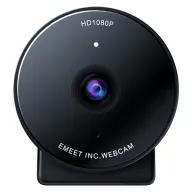
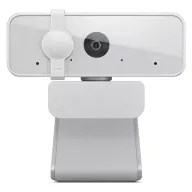
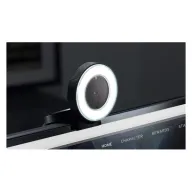
Under ₹3,000, the Lenovo 300 FHD is the best all-round 1080p webcam for calls, with a wide 95° lens and two mics. The eMeet C950 costs less and keeps the frame tight on you, and the Razer Kiyo is the one to buy for a dark room because it has its own ring light.
Budget · Under ₹2,000
eMeet C950 1080p webcam
The least you need to spend for 1080p, with a privacy cover and a tight frame that shows you rather than the room.
See it on Amazon IndiaMid-range · Under ₹2,500
Lenovo 300 FHD webcam
The all-rounder: a wide lens, two mics, a long cable and a tripod thread, from a laptop maker.
See it on Amazon IndiaBest for dark rooms · Under ₹3,000
Razer Kiyo webcam with ring light
A webcam and a light in one: the ring around the lens lights your face evenly, which is what a dark room needs most.
See it on Amazon India
Picked from Amazon.in best sellers rated 4 stars or more. Spolvero may earn a commission.
The short answer
To test a webcam, open this page in the browser you use for calls and select Test my camera, then choose Allow. You get a live preview plus your real resolution, measured frame rate and a lighting check. For any mainstream video call you want 1280×720 at 30fps with light in front of you rather than behind.
Three steps, about three seconds
Step 1: Open the test
Open the Spolvero webcam test in the browser you use for calls.
Step 2: Allow the camera
Select Test my camera and choose Allow when the browser asks for camera access.
Step 3: Read the result
Your live preview appears with a readiness score, plus resolution, frame rate and lighting checks and a fix for anything marked amber or red.
Four things worth doing before you join
Put the light in front of you
The single biggest improvement available, and it is free. A window or lamp facing you beats a more expensive camera facing a dark room, and it usually raises your resolution and frame rate too, because cameras stop compensating for darkness.
Raise the camera to eye level
A laptop on a desk films you from below. A stack of books under it fixes the angle, and costs nothing. Aim for your eyes at roughly the top third of the frame.
Clean the lens
Laptop webcams sit exactly where fingers and screen wipes land. A soft cloth fixes a surprising share of complaints about a blurry camera.
Close what you are not using
Other video apps hold the camera, and a busy CPU makes the browser drop frames. Quitting Zoom, Teams and OBS before a call is the fastest frame rate fix there is.
If the camera didn't start
Open the one that matches what the test told you. If the test detected the problem, that section is already open.
The browser blocked the camera
Your browser is refusing camera access for this site. The permission has to be reset from the address bar — a page cannot ask twice on its own.
Chrome, Edge, Brave
- 1Select the camera or padlock icon at the left of the address bar.
- 2Set Camera to Allow.
- 3Reload the page and run the test again.
Safari on Mac
- 1Open Safari → Settings → Websites → Camera.
- 2Set this site to Allow.
- 3Reload the page.
Firefox
- 1Select the padlock in the address bar.
- 2Next to 'Blocked temporarily' or Camera, select the × to clear the block.
- 3Reload the page and choose Allow.
iPhone and iPad
- 1Open Settings → Safari → Camera and set it to Ask or Allow.
- 2For Chrome, open Settings → Chrome → Camera and turn it on.
- 3Return to the page and reload.
Android
- 1Open the browser menu → Settings → Site settings → Camera.
- 2Allow the site, or clear it from the Blocked list.
- 3Reload the page.
No camera was found
The browser could not see any camera at all. That is a hardware or driver problem rather than a permission one.
Any device
- 1Check for a physical privacy shutter or a sliding lens cover.
- 2Many laptops have a camera kill switch — an F-key with a camera icon, or a switch on the side.
- 3Unplug and replug a USB camera, ideally into a port on the computer rather than a hub.
Windows
- 1Open Settings → Privacy & security → Camera and turn on 'Camera access' and 'Let apps access your camera'.
- 2Scroll down and make sure 'Let desktop apps access your camera' is on.
- 3Open Device Manager → Cameras. A yellow warning icon means a driver problem: right-click → Update driver.
macOS
- 1Open System Settings → Privacy & Security → Camera and turn on your browser.
- 2Quit and reopen the browser — macOS only applies the change on relaunch.
- 3For an external camera, try a different cable; some USB-C cables carry power only.
The camera is in use by another app
Something else already holds the camera. On Windows only one app can use it at a time, and background apps count.
Any device
- 1Fully quit Zoom, Teams, Meet tabs, Slack huddles, OBS, Camo and any camera utility — closing the window is often not enough.
- 2Check the system tray or menu bar for apps still running in the background.
- 3Reload this page and run the test again.
Windows
- 1Right-click the taskbar → Task Manager and end Zoom, Teams or OBS if they are still listed.
- 2A camera in use shows a white dot in the taskbar corner; hover it to see which app.
- 3If nothing is listed, sign out and back in — a crashed app can leave the camera locked.
macOS
- 1A green dot next to the camera means it is active. Check Control Centre to see which app is using it.
- 2Quit the app from the menu bar, or force quit it with Option-Command-Escape.
- 3Reload this page.
The preview is black, or I look dark and grainy
The camera works — the picture is the problem. This is the most common complaint and almost always lighting.
Fix the light
- 1Face your light source. A window or lamp in front of you beats any camera upgrade.
- 2Move a bright window out from behind you, or close the blind — a backlit shot makes your face a silhouette.
- 3A cheap desk lamp bounced off a wall gives softer light than pointing it at your face.
Fix the camera
- 1Clean the lens. A smear of finger grease is behind a surprising share of 'blurry webcam' complaints.
- 2Close other apps: a busy CPU makes the browser drop frames.
- 3If your camera has a utility app (Logitech, Elgato, Razer), check the exposure and auto-focus settings there.
Still black
- 1Switch camera in the picker above — a virtual camera left behind by OBS or a meeting app is often selected by default.
- 2Disable any 'virtual background' or camera-effects software.
- 3Restart the browser, then the machine.
What each app actually needs
Resolution and frame rate each app sends, from their own published requirements, checked September 2026.
| App | Minimum | Looks good at | Worth knowing |
|---|---|---|---|
| Zoom | 640×360 at 30fps | 1280×720 at 30fps | Zoom sends 360p by default; turn on HD in Settings → Video. |
| Microsoft Teams | 640×360 at 30fps | 1280×720 at 30fps | Teams caps most calls at 720p regardless of your camera. |
| Google Meet | 640×360 at 30fps | 1280×720 at 30fps | 1080p needs a paid Workspace plan and a 1080p camera. |
| Twitch / OBS | 1280×720 at 30fps | 1920×1080 at 60fps | 60fps only helps if your upload and encoder can keep up. |
Above 1080p at 30fps there is nothing more to gain for a meeting: mainstream call apps will not send it.

Two minutes now beats an apology later
Most people discover a camera problem in the first thirty seconds of a meeting, in front of everyone. Checking beforehand costs nothing and takes about as long as opening the meeting link.
How this tool handles your camera
A camera test that uploads your face would defeat the point. This one cannot.
- Your browser opens the camera and hands the stream to this page. The page shows it in a video element and samples it on a canvas — both are in your own tab.
- There is no upload code, no recording and no server that could receive video. Nothing is stored in your browser either.
- Permission is per-site and per-browser, and you can withdraw it any time from the address bar.
- Close the tab and the camera stops. The indicator light goes out because the stream really has ended.
Questions people ask
Anything we've missed?
Is my video uploaded anywhere?
No. The camera stream is shown and measured inside your browser with getUserMedia and a canvas. The page has no upload code, no recording, and no server to send video to. Close the tab and nothing remains.
Why does the browser ask for permission?
A browser will not hand any page a camera stream without your explicit permission — that is the protection that makes a test like this safe. The permission lasts for this site only, and you can revoke it in your browser's site settings at any time.
The test says 720p but the box says 1080p. Why?
Browsers hand out the resolution that suits the current conditions, not always the maximum. Low light makes many cameras drop resolution or frame rate to keep the picture bright. Test again in better light, close other apps using the camera, and check no driver utility is limiting it.
What camera information does the test show?
The camera's name as the browser reports it, the resolution and aspect ratio it is sending, the frame rate measured from the live stream beside the one the camera reports, and the mean brightness of the picture. A readiness score sums them up.
What frame rate do I need?
30fps is the standard for video calls and is what Zoom, Teams and Google Meet send. 60fps matters for gaming and streaming, not for meetings. Anything under 20fps looks noticeably jerky and usually means low light or a busy CPU.
Why is my camera dark or grainy?
Almost always lighting, not the camera. A laptop webcam has a tiny sensor: with too little light it raises gain, which adds grain, and slows the shutter, which drops frame rate. Put a light source in front of your face rather than behind you, and avoid sitting with a bright window at your back.
Does this work on a phone?
Yes. It runs in mobile Chrome and Safari, and you can switch between the front and rear camera with the camera picker.
Nothing happens when I press the button.
Check the address bar shows a padlock — browsers only allow camera access on secure pages. Then check whether a permission prompt is hidden behind another window, and whether another app such as Zoom, Teams or OBS is already holding the camera.
Is a higher score always better?
The score answers one question: will you look fine on a call. Past 1080p at 30fps with even lighting there is nothing more to gain for a meeting, so a 90 and a 100 look the same to the people watching.
Guides worth reading
- Buying advice
720p, 1080p or 4K: what a webcam actually needs to be
Meeting apps cap what they will send long before a 4K webcam becomes useful. Here is what each resolution is really worth, and what to spend on instead.
6 min read - Troubleshooting
"Camera is being used by another application": how to find the app and get it back
Another program is holding your camera. Find which one on Windows or Mac, quit it fully, then check the camera is free in a browser webcam test.
5 min read - Chrome
Camera not working in Chrome? 7 fixes, in the order that works
Chrome can't find your camera, shows a black screen, or says it's blocked. Here are the seven fixes, ordered by how often each one is the answer.
6 min read


Test your camera for something specific
More device tests, and what to record with
Same idea, same privacy. Nothing you test or record leaves your device.
- Live
Online Mirror
A mirror with light, zoom and Ghost Pose.
- Live
Mic Test
Hear yourself before they do.
- Live
Speaker Test
Left, right, and is it loud enough?
- Live
Keyboard Test
Test every key, and find out why it double-types.
- Live
Mouse Test
Catch the double-click fault before you blame the software.
- Live
Dead Pixel Test
Check a new screen before the return window closes.
- Live
Laptop Check
Nine checks, fifteen minutes, one printed record.
- Live
Voice Recorder
Record, trim, download. Nothing uploaded.
- Live
Teleprompter
Read your script while you record.
Built by Spolvero studio. We design apps and websites for other people too.
Need an app designed?